
Healthcare Product Design Starts with the Next Decision
A clinical dashboard can contain the right information and still leave someone unsure what to do. The question is what a clinician needs to understand, decide, and carry forward into care.
At Curie AI / Numo Health, I led product design across remote monitoring experiences for patients and clinical teams. That work connected device readings, overnight routines, clinical review, and the systems supporting follow-up. Each interface was part of a longer workflow.
Start with the work around the screen
A reading arrives with context: when it was recorded, whether it is complete, how it compares with earlier readings, and whether someone has already reviewed it. A status without that context can create another question instead of resolving one.
In overnight respiratory monitoring, the product spans a patient at home and a team reviewing information later. Healthcare UX has to account for both experiences. A patient needs a clear routine and understandable feedback. A clinician needs continuity between the signal, its interpretation, and the next action.
I approach that as workflow design: establish what happened, make uncertainty visible, and clarify who acts next. The visual hierarchy follows those responsibilities.
Make product rules legible
Clinical care also depends on operational rules. In the work on remote patient monitoring and Medicare requirements, product logic connected reliable readings, patient communication, and the conditions needed for a successful monitoring workflow.
Those rules shape an experience before a screen is drawn. Which events count? What happens when a connection fails? What should a person see while the system is waiting? Working through those questions with clinical and engineering partners is part of product design.
Carry the reasoning into the design system
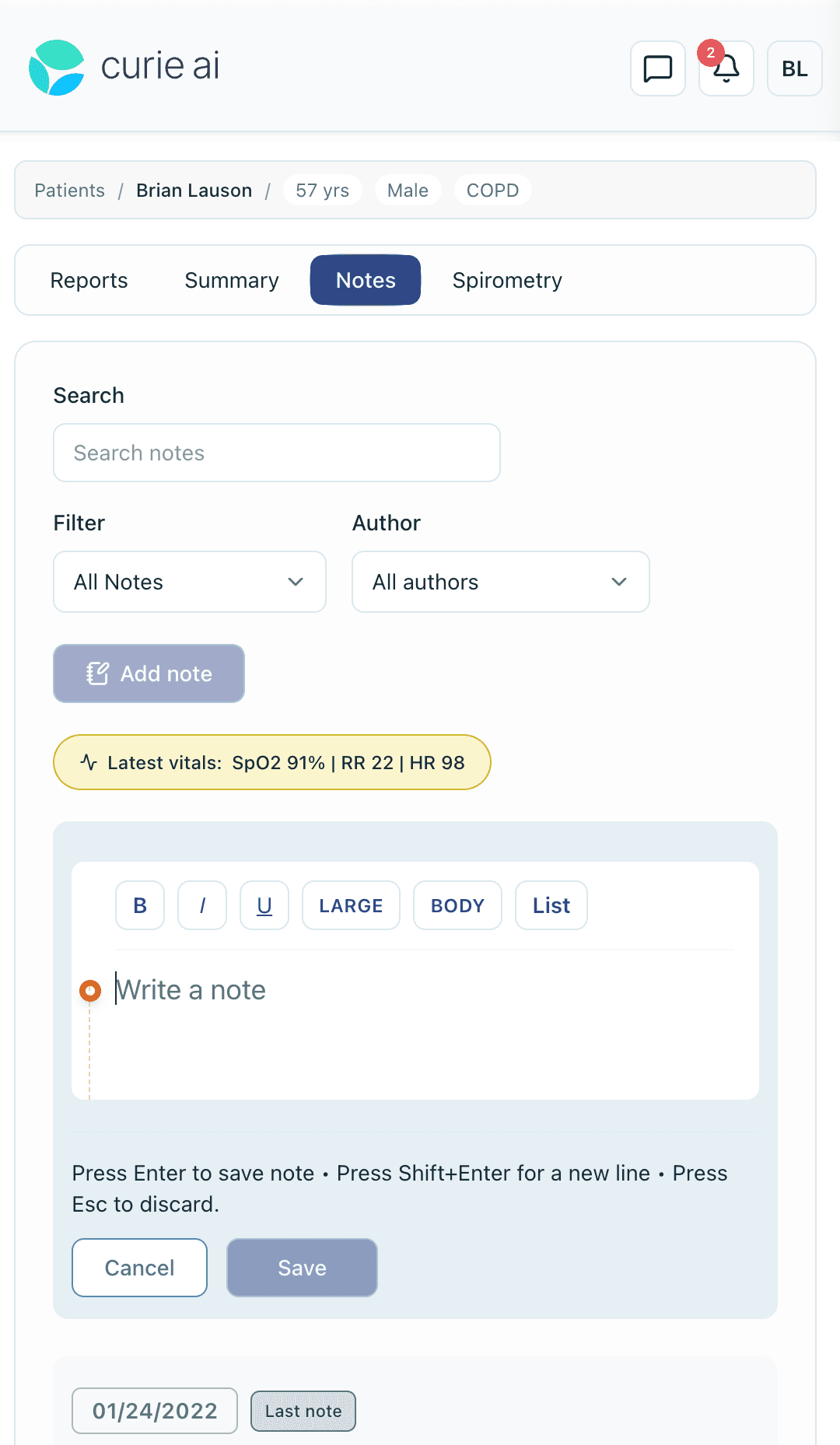
A design system makes these decisions repeatable. In the Curie + Numo healthcare design system, reusable React components and shared patterns connect interface decisions to implementation. Tables, status treatments, notes, and navigation need consistent behavior as well as consistent appearance.
The useful unit is often a complete interaction: how a patient is reviewed, how a change is explained, or how an action is confirmed. That is where a component library becomes a shared way of working.
My interest in healthcare product design comes from that connection. Strategy, product management, UX, and engineering meet in decisions that someone must be able to understand and trust. The interface gives those decisions a form.
Related: designing interfaces around data and my product design and strategy practice.
The human-in-the-loop monitoring workflow provides a closer view of clinical review. The related article on designing for clinical trust focuses on how explanations support confidence in AI-assisted care.