Design System Foundation
Lung DS
Building a production-minded design system that could support healthcare workflows, reduce UI drift, and create a shared language between design and engineering.
Focus
Tokens, primitives, components, patterns, governance
Live reference
Open Lung DSSystem model
Framing
Building a system that could survive real product pressure
I treated the design system as an execution layer. The goal was to create reusable structures that could support dense healthcare workflows, improve design and engineering alignment, and scale with the product.
Context and role
At Numo / Curie, I created a design system to support rapid product iteration while staying close to production. My role was to define the visual language, structure reusable primitives, and turn recurring product needs into scalable system patterns.
System-level thinking
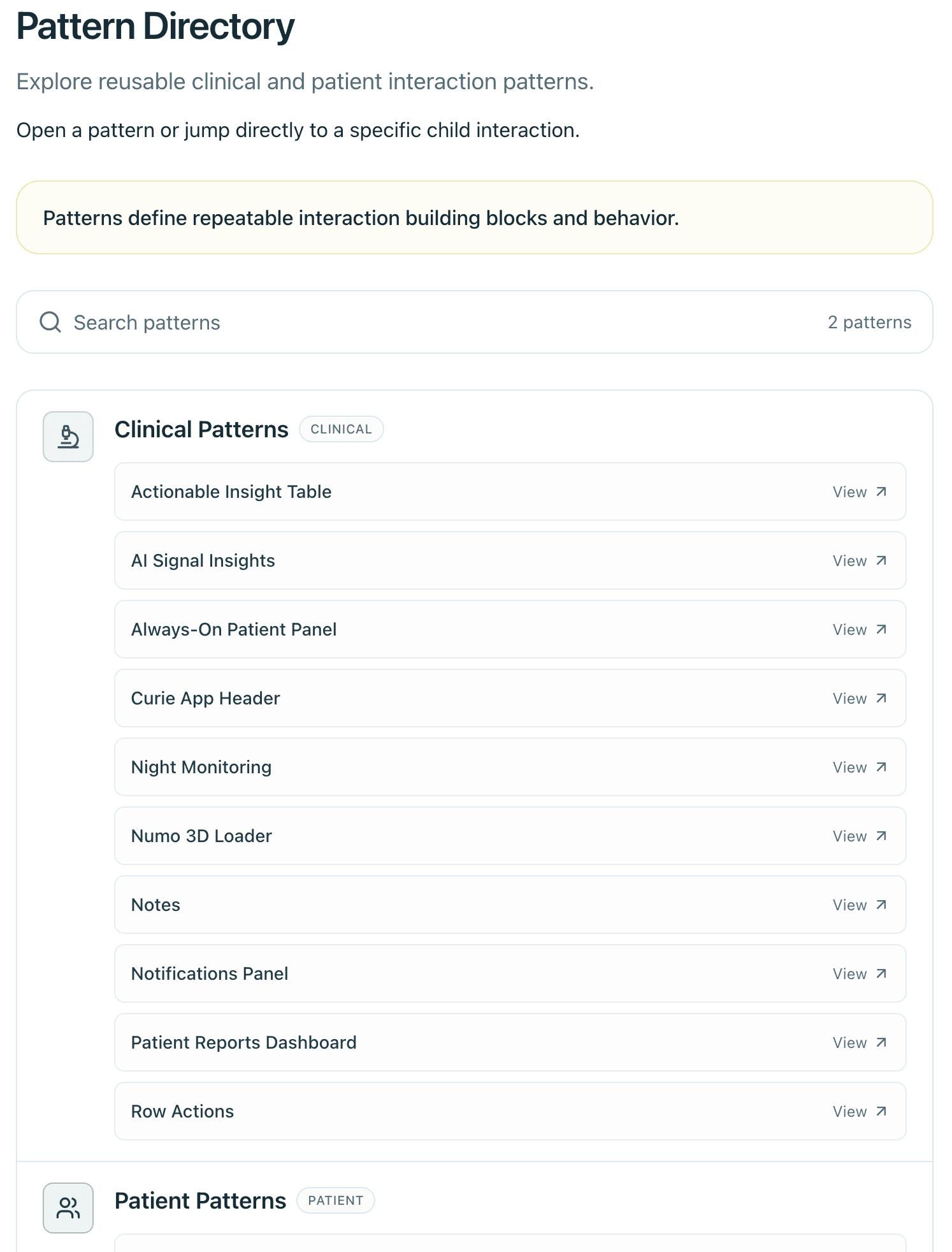
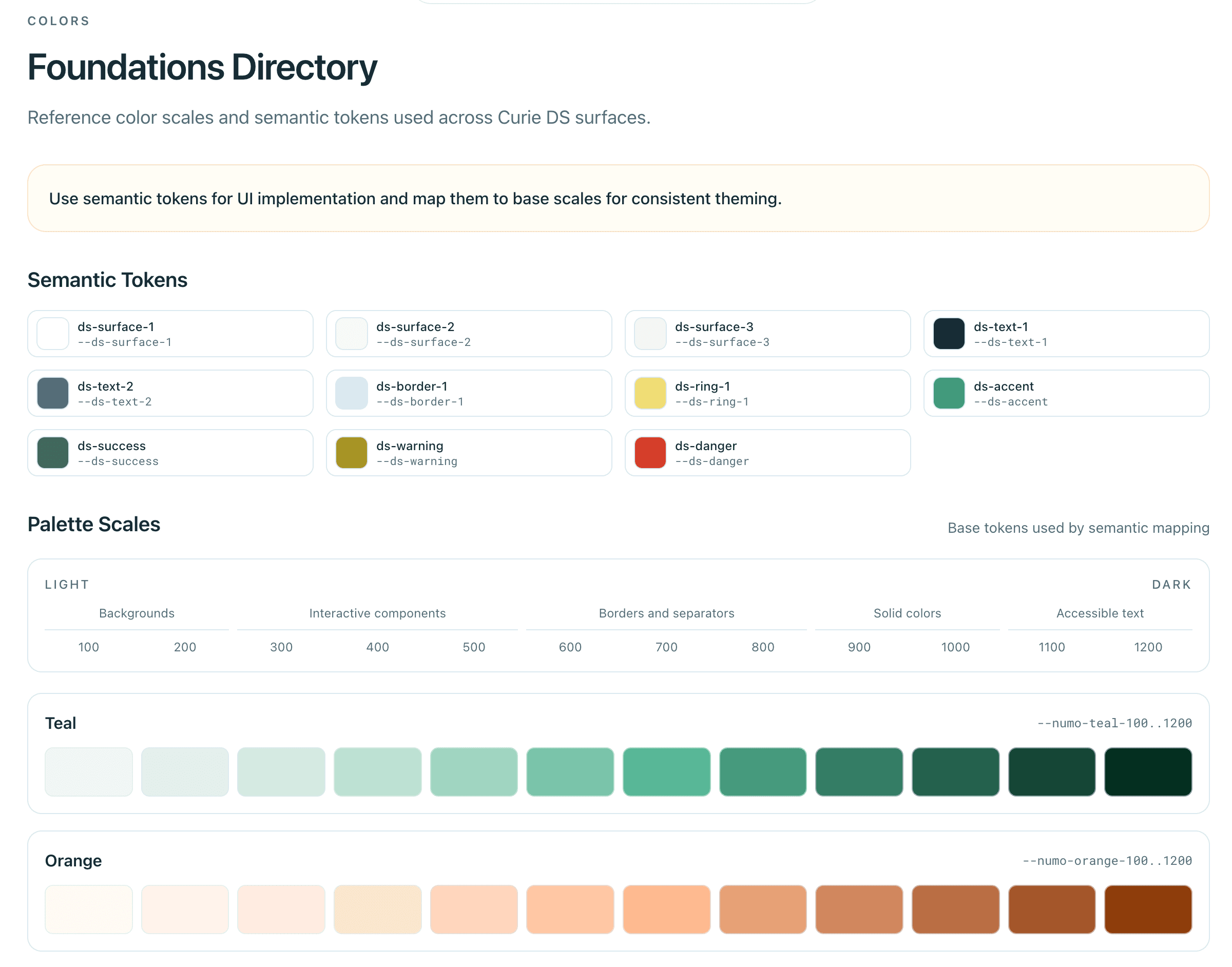
I organized the system in layers: tokens, primitives, components, and patterns.
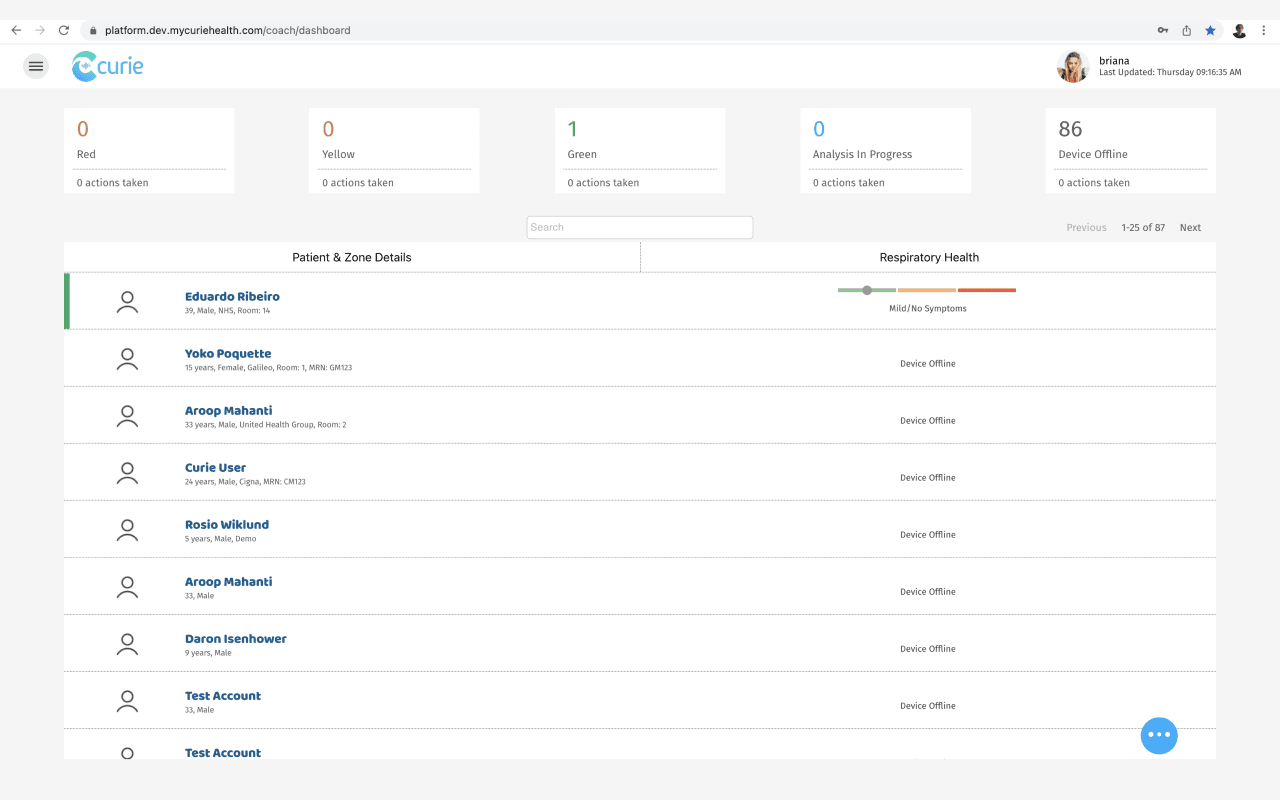
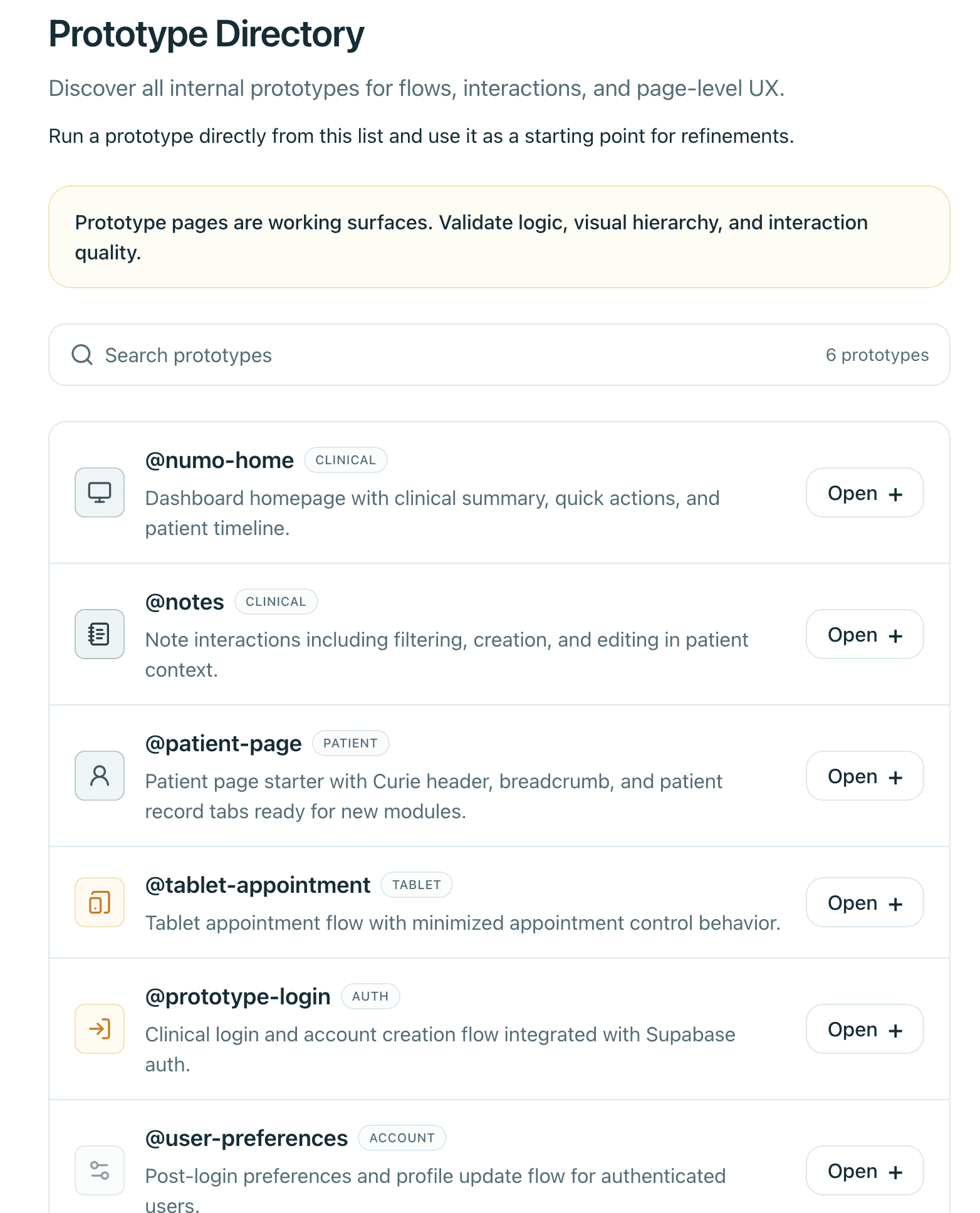
Tokens handled foundations like color, spacing, type, radius, and elevation. Primitives became building blocks like buttons, inputs, tabs, and containers. Components expanded into denser product UI, while patterns captured how those components behaved together. Prototypes were used to test patterns in dashboards, tables, and clinical workflows.
Scalability and governance
I built it close to implementation using Next.js, Tailwind, CSS variables, and reusable UI patterns that engineering could reference directly. That reduced visual drift, improved handoff, and helped the system evolve with real product needs instead of becoming static documentation.
Collaboration
The work happened in close partnership with engineering and product. We discussed component states, data density, theming, responsiveness, and how reusable each pattern really was. In a healthcare environment, design decisions were also shaped by compliance needs, clinician workflows, and the practical reality of shipping under uncertainty.
Accessibility considerations
Contrast, type hierarchy, spacing, focus states, and scannability were built into the foundation. Many clinician workflows happened under time pressure, so the system needed to support quick recognition, reduced cognitive load, and calm presentation of important information.
Impact and learnings
The biggest outcome was alignment. The design system created a common language between design and engineering and made it easier to prototype, validate, and scale product decisions. My main learning was that design systems become valuable when they are tightly connected to real workflows, not when they live in isolation.
Next case study
See how this system performs inside a real product
The RPM case study shows how these design system decisions held up under dense data, clinical notes, patient history, and actionable dashboard workflows.